
By Lizzy Nyoike / Edited by H. Jiahong Pan
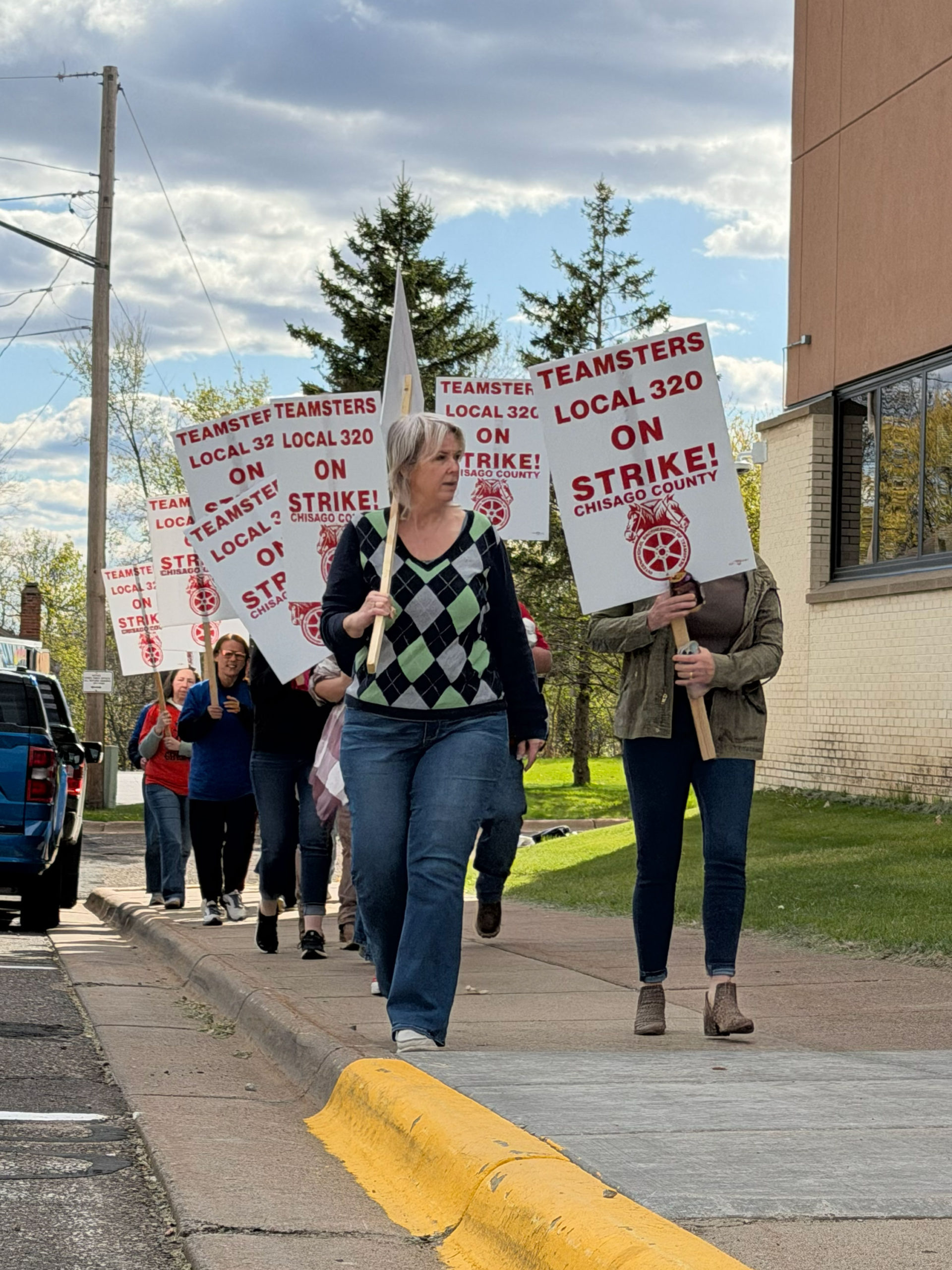
CENTER CITY – About 126 Teamsters Local 320-represented Chisago County social workers, public assistance workers, and case aides returned to work today after reaching an agreement over wages and healthcare.
The near-four-month strike, which began May 1, is the longest county-worker strike recorded by the Minnesota Bureau of Mediation Services, according to MPR News. It is also one of the longest public-sector strikes in the state; the longest public-sector strike on record in Minnesota so far involves Park Rapids city workers in 1977.
Amy Perusse, a Teamsters Local 320 business agent representing the striking workers, says they wanted to move to the Teamsters’ health fund because it has lower premiums.
Perusse says the Teamsters plan costs about $1,900 per month, and members wanted the county to contribute that amount. They also want the county to contribute $400 to workers’ health reimbursement accounts.
County officials argued comparing premiums alone does not show the full cost of each plan. In an Aug. 7 statement, the county said its plan has higher deductibles but includes worker-funded health savings accounts and health reimbursement arrangement contributions. They say the Teamsters plan has lower deductibles but requires other costs, including copayments and coinsurance, where workers pay a percentage of what insurance is willing to pay. County officials also published its 2026 Benefits Guide and a comparison of the two plans.
At the end of the day, the county agreed to let members switch to the Teamsters plan. Half of what Chisago County saves will be invested into members’ health reimbursement accounts.
Meanwhile, Teamsters Local 320 also secured a wage increase. Workers will receive a 3% cost-of-living increase in 2026 and 2027, as well as a 4% increase in 2028. Workers will also receive a 3.5% step increase tied to their anniversary dates.
Perusse said step increases are connected to a worker’s position on a pay scale and should not be described as across the board wage increases. She said the union removed its earlier request for an additional market adjustment from its latest proposal.
Negotiations had proven frustrating for Chisago County Administrator Chase Burnham, who says the requests of Teamsters Local 320 have shifted throughout negotiations, making it difficult for the two agencies to reach an agreement.
Burnham added between 50 and 60 Teamsters-represented workers continued to work during the strike. (Teamsters 320 represents about 170 Chisago County social services workers.) He also added that supervisors in the county’s Health and Human Services department and approximately 60 additional temporary workers from other counties were helping to maintain services, which he believes allowed the county to meet state-mandated minimum service requirements.
However, striking workers said residents have approached the picket line or contacted them personally after experiencing unanswered calls, delayed paperwork and difficulty navigating county services. In addition, some social workers have also left the county altogether for positions elsewhere in the state.
Workers say they did not make the decision to strike lightly and are aware of the repercussions. Trust is one of them. “I think there’s going to be a huge mistrust between workers and the community,” child protection case aide Elly Tomczak said. “That’s definitely something that we are nervous about out here.”
Still, lead financial eligibility worker Jessica Lutz believed striking is important so they can fight for what they need to adequately serve their community. “At some point we had to also take a stand for us in order for us to be able to fight for our community better,” Lutz said.
