
By Lizzy Nyoike / edited by H. Jiahong Pan
Editor’s Note: We’ve retained Lizzy to write about our members and the different job classifications they represent, so that we and the general public have a better understanding of the work we do, as well as our working conditions. Learn more about Lizzy and the project here. If you want Lizzy to write about you and your job class for our website, fill out this form: Be Featured On Our Website (and perhaps in the news) about your work!
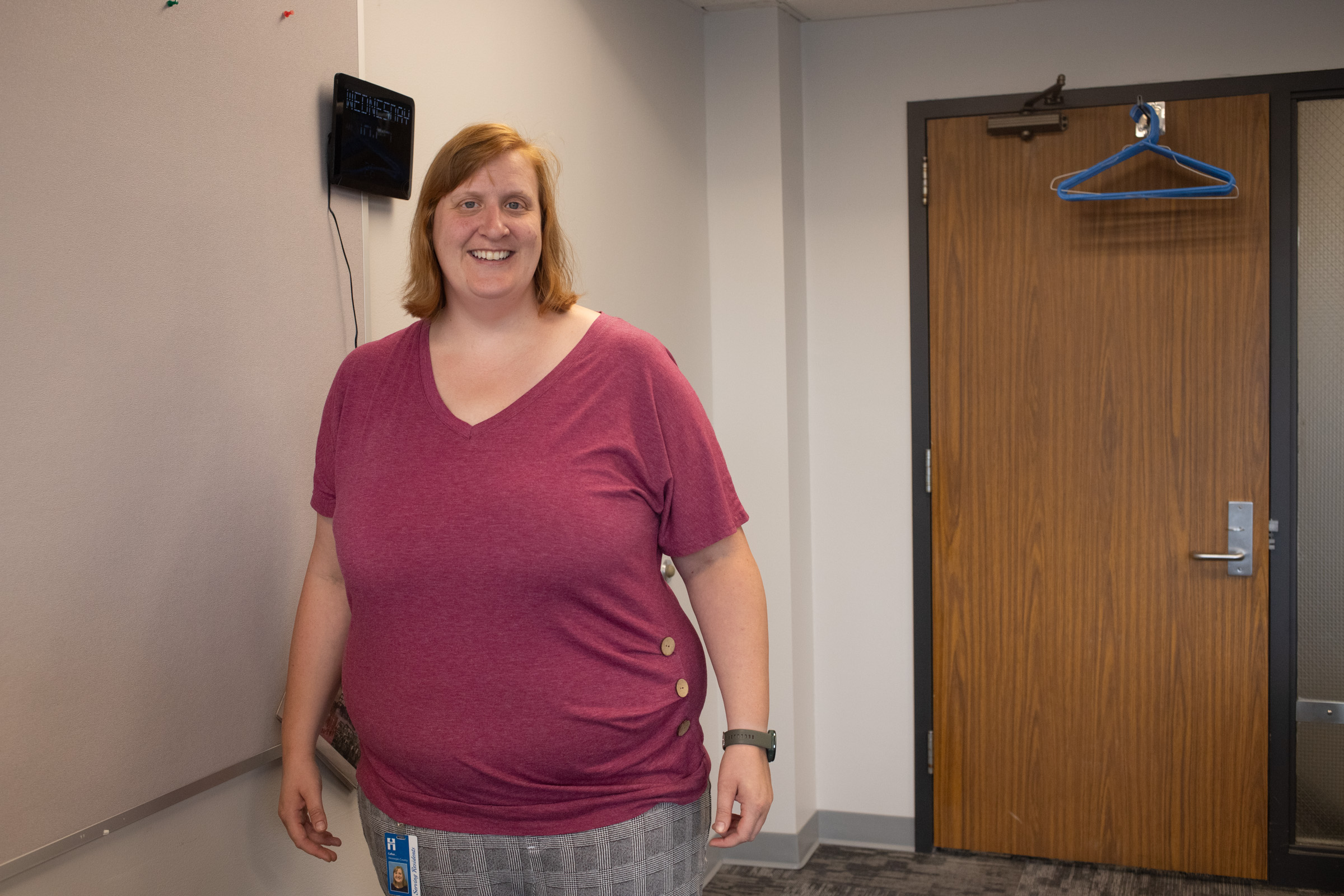
For Callan Billings, being a social worker means spending much of her workday helping clients receive the services they need. Sometimes it means traveling across Hennepin County to meet with clients face-to-face. Other times, it means working from home, writing assessments and documenting if clients remain eligible for disability services.
Billings is a long-term services and support social worker who conducts MnCHOICES assessments for Hennepin County. MnCHOICES is a computer application used to support certified assessors to determine program and service eligibility for clients.
Billings has worked for the county for about two and a half years. Prior to that, Billings spent a decade working with another county and a contracted agency.
Long Term Services and Supports, which is overseen at the state level by the Minnesota Department of Human Services, can help people with personal or medical care, housekeeping and other everyday tasks, as well as support with larger goals like seeking employment. Services can be provided in a person’s home, assisted living settings, nursing facilities and other integrated settings that meet multiple needs. Minnesota reports providing LTSS at home or in the community costs less than institutional care, contributing to many Minnesotans choosing to receive support in those settings.
Minnesota’s LTSS system serves people of all ages, backgrounds and abilities with services designed to give people a choice over when and how they receive support. Some services are funded through Medical Assistance in Minnesota, while others receive funding through state and federal programs. Over 800,000 people provide LTSS services to Minnesotans, paid and unpaid, according to the Minnesota Department of Health.
Billings’ role primarily focuses on reassessments for people already receiving disability services, ensuring they remain eligible.
“I go out to anyone who’s on a waiver and will redetermine their eligibility and screen for their PCA hours,” Billings said.
Billings said her work is split between completing assessments in the field and working from home to write them up.
For Billings, working directly with residents is one of the main parts of her job she enjoys.
“I love working with the residents within Hennepin County,” Billings said. “I just love hearing their stories.”
Those conversations also help Billings identify concerns beyond the assessment itself. If someone has an issue with their case manager or another service, she said she can communicate those concerns to the appropriate case manager and offer suggestions when needed.
While Billings’ helps connect clients to services and long-term support, she said the cost of housing is one of the most common concerns she hears from clients, particularly as affordable housing options remain limited.
“Rent is probably their number one concern with the high costs of renting and the lack of affordable housing within the area,” Billings said. BIllings adds she hears clients struggle with groceries and transportation.
Meanwhile, Billings said changes within her workplace have added pressure to the job.
With Hennepin County under a hiring freeze, Billings said positions left by annual assessors who have left the organization have not been filled. Their cases instead have been distributed among remaining workers.
Billings said she normally handles around 11 to 12 assessments each month. But lately she oversees roughly 13 to 15. Some of her colleagues have handled as many as 17 assessments per month. The workload can make it difficult for assessors to feel like they are getting a break, even when they take time off.
“I’m feeling like I’m being stretched really thin on a regular basis,” Billings said. “I have had other co-workers also tell me that they’re in the same boat. They feel really overwhelmed, especially with the increased caseload.”
Billings said she recently completed six assessments back-to-back in one week before taking a half day to reset. She also shared that other colleagues have returned from vacation to a full workload with a tight deadline.
Billings hopes the county will eventually be able to hire additional staff and find ways to better manage workloads when employees take time off. Addressing those challenges is also about ensuring residents can continue receiving the support they depend on.
“There are people that depend on continuing their services,” Billings said.
